
Shoes are the fastest way for an entryway to fall apart. One pair by the door multiplies into eight over a week, and suddenly the first thing anyone sees walking in is a pile on the floor.
Fixing it comes down to matching the storage to how many pairs actually live there and how much space you can give up.
These entryway shoe storage ideas make sure that your shoes will never scatter around the place again!
This post contains affiliate links. I may earn an extra commission, at no extra cost to you.
Count Your Pairs Before You Buy Anything
Most shoe storage fails because it was bought for the space instead of the shoes. The number of pairs that live by your door is what should decide the furniture, not the other way around.
Once you’ve counted, the choice gets much simpler:
- Under 5 pairs: a basket, a boot tray, or a storage ottoman
- 5 to 12 pairs: a bench with cubbies, drawers, or a flip-top lid
- 12 pairs or more: a cabinet, a shoe tower, or a built-in
Then measure the depth you can spare. Leave at least 36 inches of clear walking space in a hallway.
If that doesn’t leave room for a standard cabinet, slim tilt-out cabinets and wall shelves are the ones to look at.
Benches and Seating With Storage
1. Choose a Flip-Top Storage Bench

A flip-top bench that lifts to reveal an open box underneath holds more shoes than any other single piece, since nothing inside needs arranging. Most fit nine or ten pairs lined up, and more if they’re piled in.
The seat also gives you somewhere to sit while pulling boots off, which matters more than people expect.
2. Use a Bench With Open Cubbies

Open cubbies under a bench suit everyday shoes, because grabbing a pair takes no lifting or opening at all. Each cubby usually holds one pair, which makes it easy to see when the system is overflowing.
Everything stays visible, so this works best when the shoes by the door are the ones actually in rotation.
3. Hide Shoes in Bench Drawers

Drawers under a bench close off the mess while still opening easily, which suits entries visible from the living room.
They also hold the small things that collect near a door, like insoles, polish, and spare laces.
Deep drawers take boots on their sides, though anything tall is better stored elsewhere. Soft-close runners keep them quiet.
4. Set Up a Hall Tree
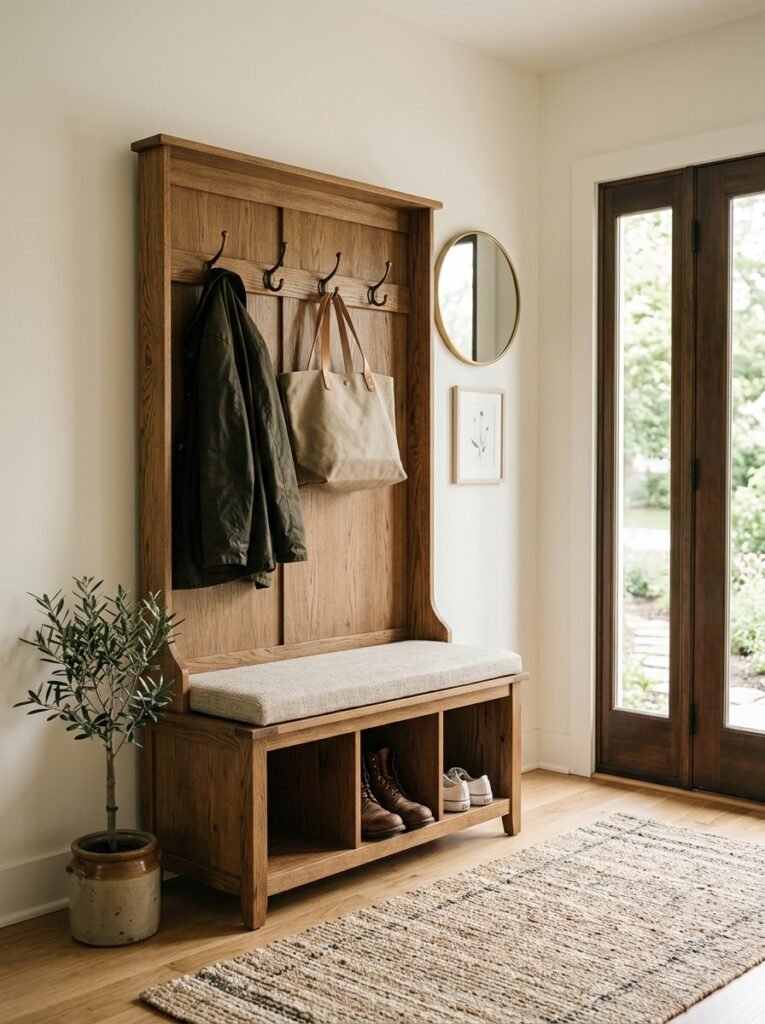
A hall tree combines everything an entryway needs into one tall piece, which is perfect if you don’t have a coat closet. A good one covers three jobs at once:
- A bench seat for pulling shoes on
- Shoe shelves or cubbies underneath
- Hooks above for coats and bags
Anchor it to the wall, since a tall piece loaded with coats can tip forward.
Closed Cabinets and Cupboards
5. Fit a Slim Tilt-Out Cabinet
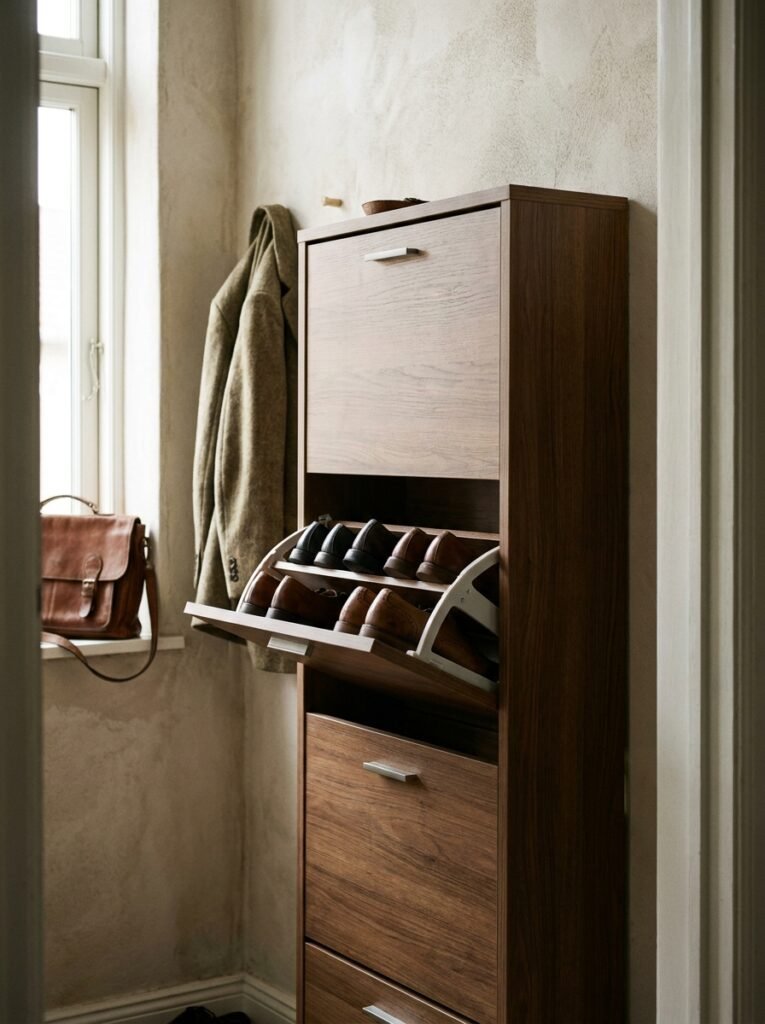
Tilt-out cabinets hold shoes at an angle, so the whole unit can be under ten inches deep. That makes them the answer for hallways where a standard cabinet would block the walking path.
Each compartment takes two or three pairs, so a stacked unit handles a whole household. The flat top doubles as a spot for keys.
6. Pick Slatted Cabinet Doors
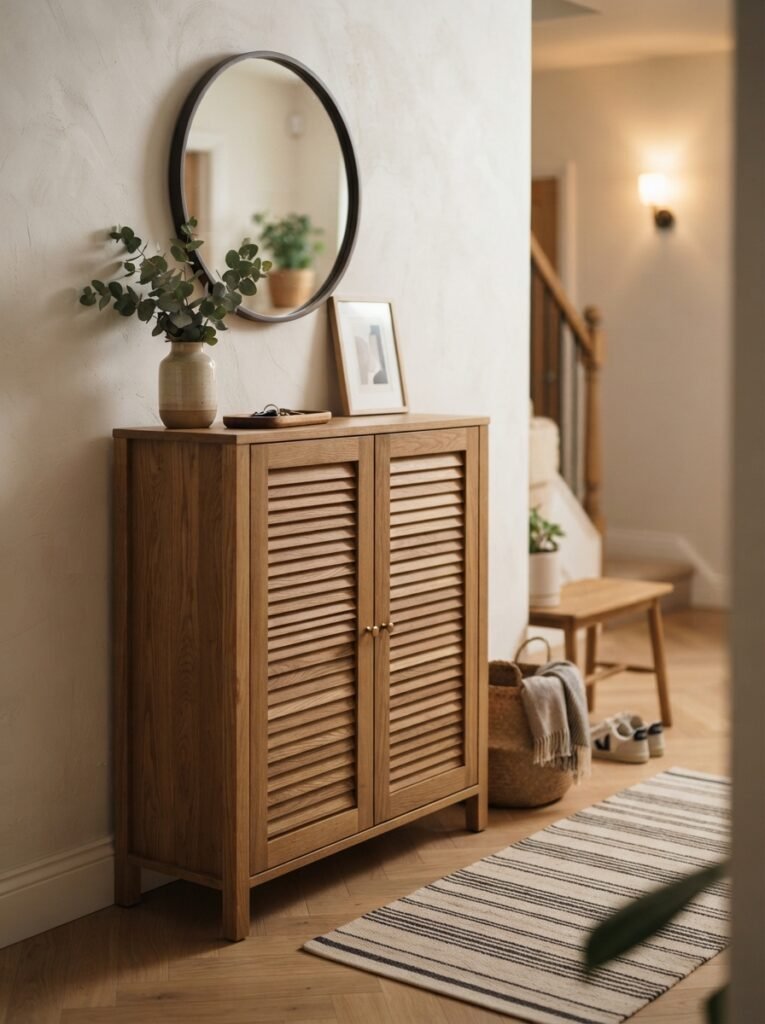
Closed storage traps damp and odor, so a cabinet with slatted doors solves the problem that the hidden look creates. Air moves through freely while the shoes stay completely out of sight.
It’s worth prioritizing if anyone in the house runs or plays sports, since gym shoes cause most of the smell.
7. Try a Mirror-Front Shoe Cabinet

A slim shoe cabinet with a full-length mirror on the front does two jobs in one footprint.
You get hidden shoe storage and a last-look mirror by the door, which is ideal in a small entryway.
The mirror also bounces light around, so a dark hallway instantly feels bigger. If you can, wall-mount it to save even more floor space, but either way works fine.
8. Repurpose a Sideboard or Dresser

A low sideboard or short dresser makes an excellent shoe cabinet, and secondhand ones cost a fraction of purpose-built furniture. A few small changes make it work:
- Remove a shelf if the compartments are too shallow
- Take out the drawers and slot in baskets instead
- Use the top for keys, mail, and a lamp
Look for pieces around 14 inches deep so standard shoes fit flat.
9. Build In a Bench With Cabinet Doors
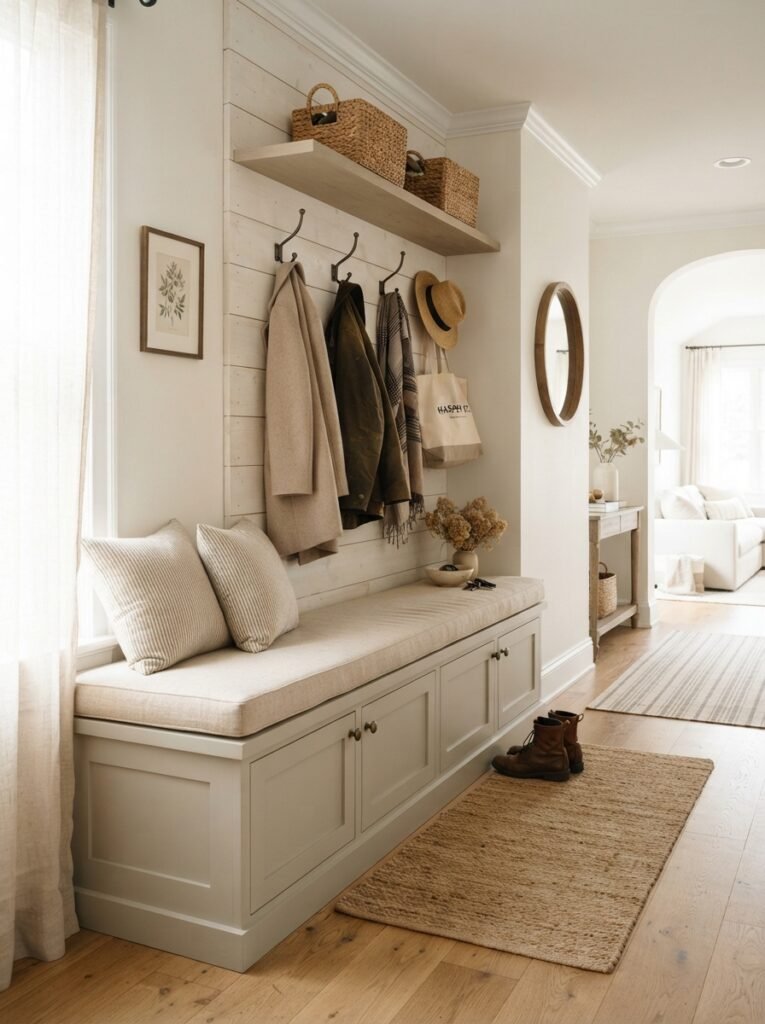
Building a bench into an alcove or along one wall gives you the most storage per square foot, since nothing is wasted around the edges. Cabinet doors below keep it looking like built-in joinery instead of furniture.
Add a cushion on top and hooks above, and the whole entry looks designed in one go. It adds real value to the home too.
Vertical and Wall-Mounted Storage
10. Float Shelves on the Wall

Wall-mounted shelves keep the floor completely clear, which is worth a great deal in a tight entry.
Two or three slim shelves at different heights hold everyday shoes at grab height and less-used pairs higher up.
Add a small lip to the front edge so shoes don’t slide off. Wood shelves look warmer than metal.
11. Stack a Tall Narrow Shoe Tower

A vertical shoe tower trades width for height, so eight or more pairs fit into roughly one square foot of floor. That makes it the obvious choice for the gap beside a door or between a console and a wall.
Choose one with a closed back so shoes don’t mark the wall behind. Put heavier boots on the bottom shelves.
Also read: 14 Narrow Entryway Styling Ideas For Tight Hallways
12. Hang an Over-the-Door Organizer
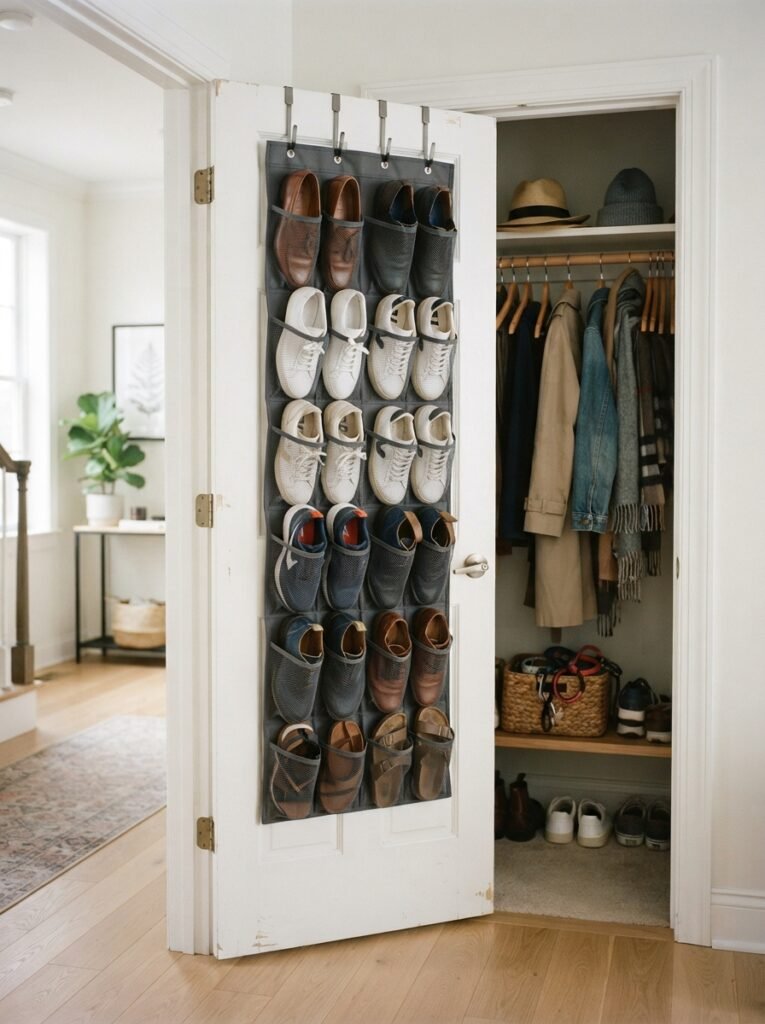
The back of a coat closet door holds a surprising number of pairs, and it costs nothing in floor space.
Fabric pocket organizers suit flats and sneakers, while wire versions take heavier shoes without sagging.
Check that the door still closes properly first, since deeper organizers can stop it latching. Clear pockets make pairs easy to spot.
13. Hang Shoes on a Peg Rail
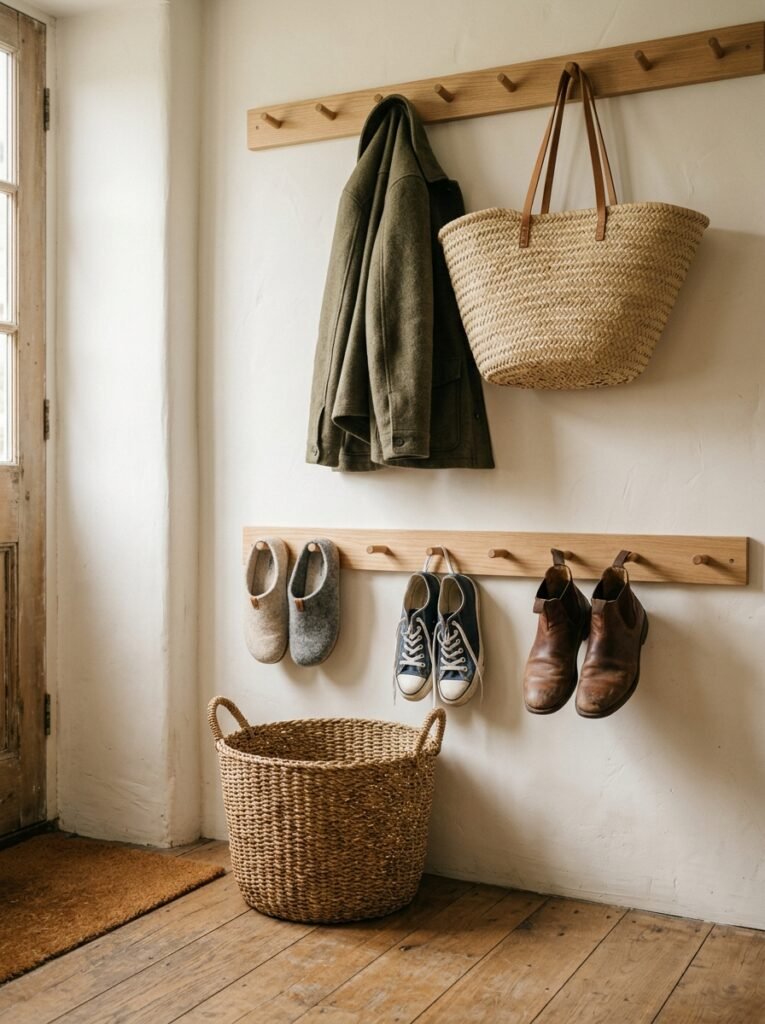
A Shaker-style peg rail mounted low on the wall holds shoes, slippers, and even boots by their heels, lifting everything off the floor.
Mounted higher, the same rail takes coats and bags too.
It’s one of the cheapest wall options and looks charming in cottage or farmhouse entries. Space the pegs about six inches apart.
Baskets and Open Storage
14. Give Everyone Their Own Basket

Assigning everyone their own basket removes the daily argument about whose shoes are where. Line them up under a bench or along a wall, and the system runs itself. A few details help it stick:
- A label or tag with each person’s name
- A slightly bigger basket for adults
- Baskets low enough for kids to reach
When a basket overflows, it’s time for that person to clear out.
15. Set Out a Boot Tray for Wet Shoes

Wet and muddy shoes need somewhere that isn’t the floor, since the last thing you want is water seeping toward the baseboards.
A boot tray catches drips and grit, and it wipes clean in seconds.
Add a layer of river stones so shoes drain and dry faster. It looks nicer too.
Keeping the System Working
16. Keep a Boot Dryer by the Door

A compact boot dryer by the door dries wet shoes overnight, which stops that damp smell before it ever starts.
It’s especially useful in rainy or snowy climates, or for anyone who runs outdoors.
Keep it right beside the boot tray so wet shoes go straight from one to the other. Most fold flat when not in use.
Final Thoughts on Entryway Shoe Storage Ideas
The right furniture is only half of it. The other half is habit, since even the best cabinet overflows if it’s holding shoes nobody has worn in months.
Keep the seasonal swap on your calendar, give everyone a clear spot for their pairs, and deal with wet shoes before they get put away.
Deep entries can take benches, narrow ones suit tilt-out cabinets or wall shelves, and any closet door is free storage waiting to be used.
Get those pieces lined up and your entryway will look better than ever!
Entryway Shoe Storage Ideas FAQ
Most benches and cubby units hold six to twelve pairs, while cabinets can take up to twenty depending on the design.
Count what actually needs to be by the door daily and size from there. Anything not in current rotation belongs in a closet, since entry storage fills faster than expected.
Standard shelf cabinets need roughly twelve to fourteen inches to hold shoes flat.
Tilt-out cabinets angle the shoes, so they work at under ten inches, which is what makes them suit narrow hallways.
Measure your walking path first, because depth is what determines whether a hallway stays comfortable.
Go vertical and use surfaces that already exist.
Wall-mounted shelves, an over-the-door organizer, or baskets under an existing console all add storage without consuming floor space.
A slim tilt-out cabinet is often the best single purchase, since it holds a lot in very little depth.
Airflow is the main fix, so choose slatted or louvered cabinet doors instead of solid ones, or leave a gap at the back of enclosed storage.
Let damp shoes dry before putting them away, since sealed cabinets trap the moisture that causes odor. Cedar blocks and charcoal bags absorb what’s left.
A bench with storage is the most common answer, since it gives you seating and shoe space in one footprint.
Wall-mounted shelves, a slim cabinet, or baskets under a console all work where floor space is tight. Even a boot tray by the door beats letting shoes spread across the hallway.
Pingback: 16 Smart Entryway Organization Ideas to Keep Your Home Organized