
If you do a lot of cooking, you tend to keep many ingredients and materials inside your kitchen, and it can be a hassle to keep them organized.
For a smooth cooking experience, of course we want everything to be organized! From your containers, bottles, and jars, you can have designated spots for them and reduce clutter in your pantry.
This way you’ll know exactly where to grab stuff without digging through everything like you’re finding a needle in a haystack!
Here are 14 of the best pantry organization ideas so you don’t have to worry about it anymore.
This post may contain affiliate links, I may earn an extra commission, at no extra cost to you.
The Rules That Keep a Pantry Organized
Containers and baskets only work if the system behind them makes sense. These are the rules that keep a pantry tidy months later, not just the day you finish it:
- Empty it completely first. You can’t organize around clutter, so everything comes out before anything goes back in!
- Everything gets a zone. If an item has no home, it will end up wherever there’s a gap.
- Eye level is prime real estate. Daily items go there, backups and rarely used things go high or low.
- If you can’t see it, you’ll buy it again. Clear containers and labels are what stop you owning four bags of rice.
- Leave empty space. A pantry packed to 100 percent falls apart within a week of grocery shopping!
Start Here Before You Buy Anything
1. Label Absolutely Everything

Without labels it’s far too easy to grab the wrong thing. An organized pantry is never quite enough, you have to label it properly too!
It takes maybe an hour to set up but saves you time every single day, and even writing on a piece of masking tape does the job.
Add the expiration date to the label when you decant something, that’s the one thing people always forget!
2. Store Heavy Items on Lower Shelves

Heavy canned goods, bulk items and large bottles should always live on the lowest shelves, where they’re easier and safer to lift.
It also stops heavy things falling from up high, which is a real safety issue especially with kids around.
Keep the lighter, most frequently grabbed items at eye level, that’s the shelf you’ll reach for a dozen times a day!
Containers, Baskets and Bins
3. Glass Containers for Storage

One of the fastest ways to make a pantry look cleaner and more polished is decanting your goods into glass containers.
It’s also much easier to see what you have and how much is left, unlike the typical hard to see plastic tubs.
Airtight lids are the part that actually matters, they keep flour, rice and cereal fresh for months longer!
Also read: 13 Spanish Kitchen Ideas for a Warm, Rustic Kitchen
4. Use Matching Containers for a Consistent Look

Matching containers make a pantry look neat and consistent across the whole space, even when it’s packed full.
It’s just more satisfying to look at than a random mix of shapes, sizes and colors all competing with each other!
Square containers beat round ones every time, because circles waste the corners of every single shelf!
5. Use Baskets to Keep Items Together
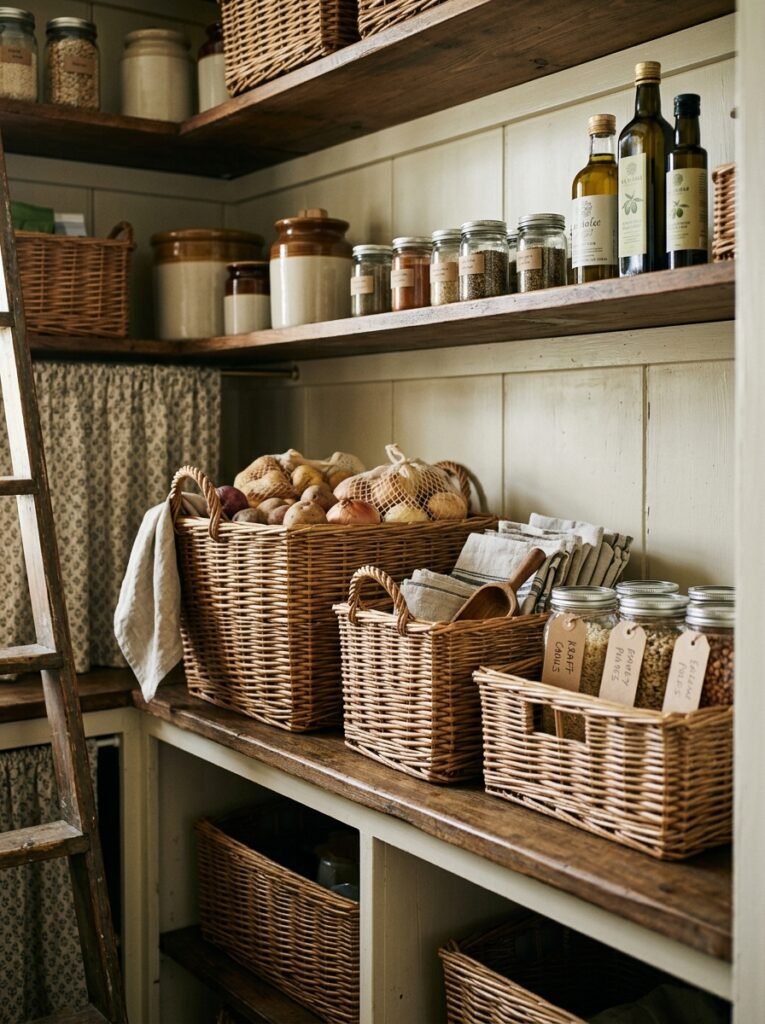
Baskets aren’t only good for decoration, they’re a must have for keeping everything grouped and tidy!
I always separate my goods into zones using baskets, so snacks, cereal and spice packets each get their own.
Pick baskets with handles, because a basket you can pull out like a drawer is ten times more useful than one you can’t!
6. Stack Your Bins and Containers

It’s all about maximizing your vertical space, especially if you’re working with a small pantry.
Stackable bins turn one shelf into two or three levels, which frees up a surprising amount of room for everything else.
Only stack things you reach for rarely, because unstacking three bins to get the pasta gets old fast!
Maximize Every Inch of Space
7. Optimize Vertical Space

One of the easiest places to start, and it can cost you nothing at all!
Most pantries have dead air above every row of cans, so tiered organizers and shelf risers claim that space back instantly.
A tiered riser means you can see the back row of cans without moving the front row, which is the whole reason things get forgotten!
8. Incorporate Under Shelf Storage Baskets
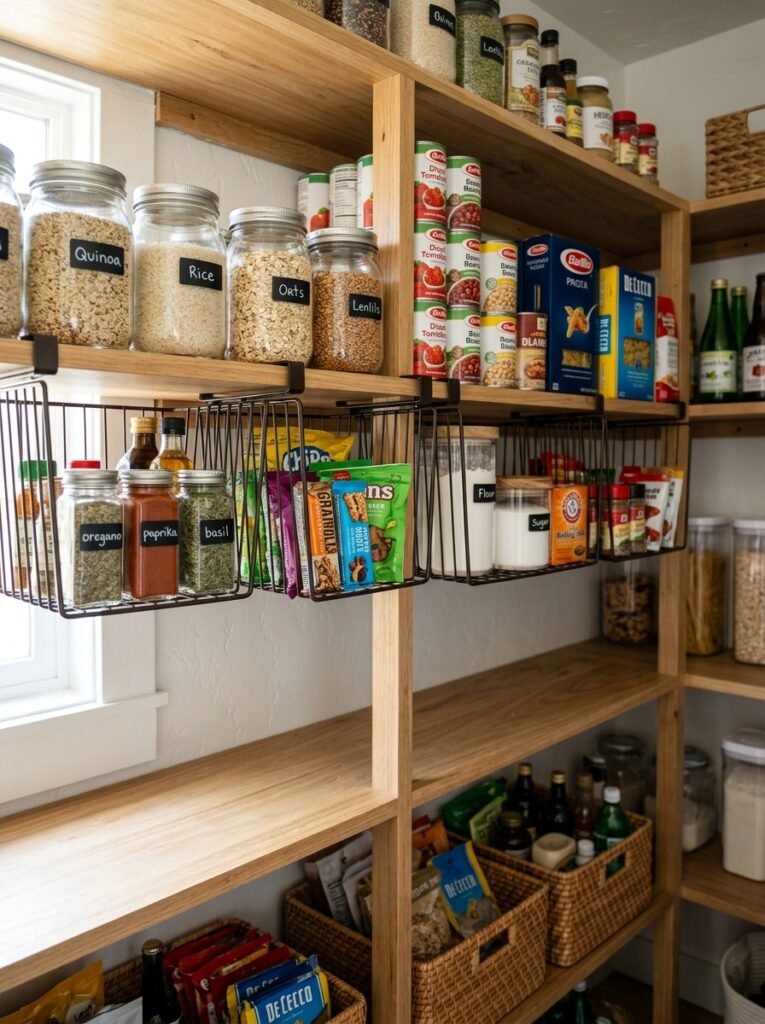
One extra spot people always miss is the empty space directly under each shelf!
Under shelf baskets clip straight on and create a whole extra layer of storage without any tools or drilling.
Keep them for light things only, like snack bags, foil boxes and spice packets, they’re not built for cans!
9. Add Pull-Out Drawers for Deep Shelves

Deep shelves are where food goes to be forgotten, since reaching all the way to the back means knocking everything else over!
Pull-out drawers are your best friend here. Grab the handle, slide it out, take what you need, push it back.
Measure the shelf depth and height before buying, a drawer an inch too wide is completely useless!
Also read: 12 Amazing Kitchen Drawer Organization Ideas You Need to Try
10. Incorporate a Lazy Susan

Instead of reaching and digging all the way to the back of a shelf, a lazy susan brings everything to you with a spin!
Spice bottles, sauces, oils and vinegars all live happily on one, and nothing gets knocked over on the way out.
The ones with a raised lip are worth the extra few dollars, they stop bottles flying off when you spin too fast!
11. Use Pegboards for Shelves and Racks

Pegboards are extremely versatile, which is exactly why they’ve been in workshops forever!
You can hang baskets, hooks, small shelves and racks in any configuration that suits your stuff, then rearrange it all in ten minutes when your needs change.
Mount one on the inside wall of the pantry rather than the back, so it never eats into your shelf depth!
12. Hang an Over-the-Door Organizer
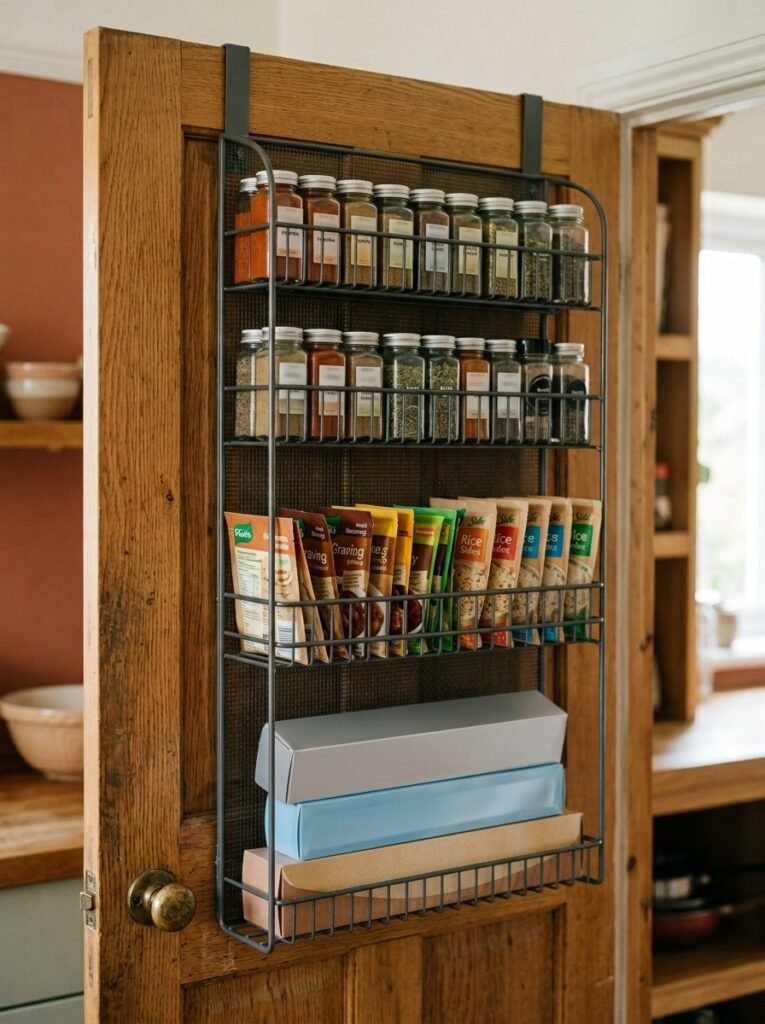
The back of the pantry door is the most wasted square footage in the entire kitchen!
An over the door rack holds spice jars, packet mixes, wraps and snack bags, all in plain sight and all off your shelves.
Check the door clears the shelves before you hang one, an inch of overhang and the door won’t shut at all!
Zones, Lighting and Finishing Touches
13. Spice Racks for Your Spices
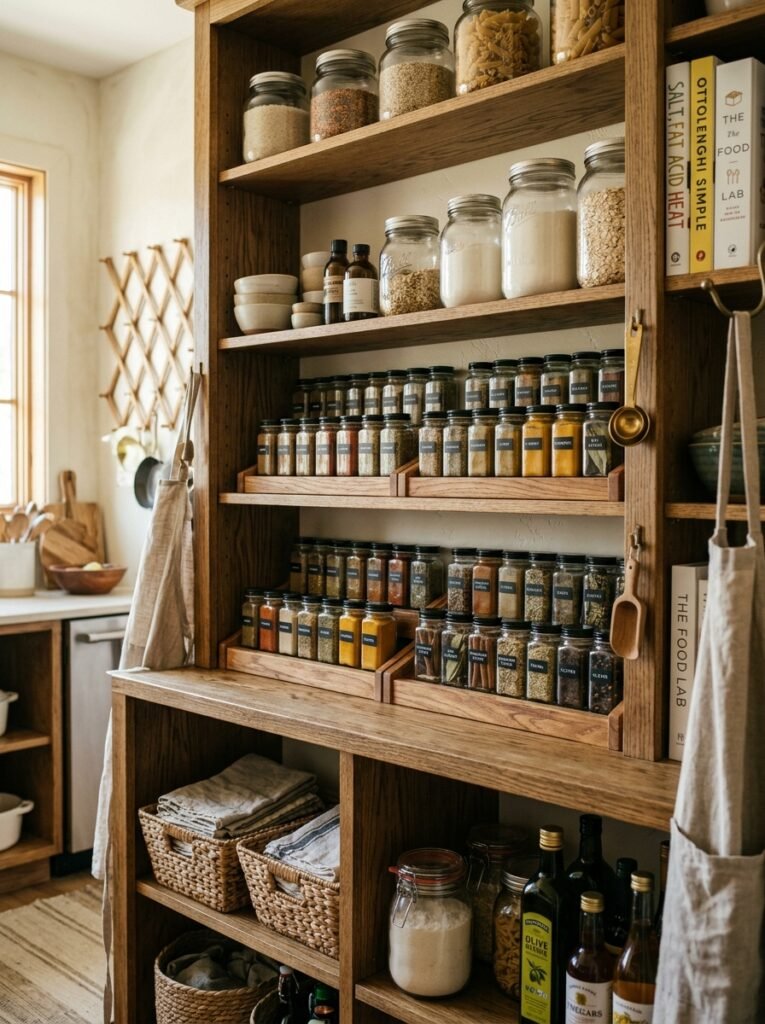
Make your life easier by storing spice bottles in a proper spice rack instead of a jumbled basket!
A rack puts everything in plain sight, so mid recipe you can grab what you need without rummaging through fifteen identical jars.
Alphabetize them if you cook a lot, it sounds excessive until the first time you find the cumin in two seconds!
Also read: 13 Easy Spice Rack Ideas for an Organized Kitchen
14. Create a Snack Storage Zone

Dedicate one specific shelf, basket or bin purely to snacks so everyone in the house knows exactly where to look.
Kids especially love having their own snack zone they can reach, so keep it on a lower shelf. We don’t want anyone climbing the pantry!
Portion snacks into a shallow open bin instead of leaving the big bags, it stops the whole packet disappearing in one sitting!
Final Thoughts on Pantry Organization Ideas
You don’t need all 14 of these to fix your pantry, you just need the handful that match how your kitchen actually gets used!
Start with the free stuff: declutter, group everything into zones, and move the heavy items down low. That alone solves most pantry problems before you spend a dollar.
Then add containers, baskets and labels slowly as you figure out what you’re short on. A pantry that gets built around your habits is the one that still looks good six months later!
Pantry Organization FAQ
Take everything out first, then throw away anything expired or stale and group what’s left into categories like baking, canned goods, snacks and breakfast.
Put daily items at eye level, heavy things low, and backups up high, then buy containers only once you can see what you actually have. Doing it in that order stops you buying bins that don’t fit what you own.
Decant the things that come in flimsy bags and go stale fast: flour, sugar, rice, pasta, cereal, oats, nuts and snacks.
Leave canned goods, jars and anything still sealed in its original packaging, since there’s no benefit to moving those.
Airtight lids matter more than the container material, and always label with the contents and the expiration date.
Go vertical and use the door, since those are the two places small pantries waste the most space.
Tiered risers, stackable bins, under shelf baskets and an over the door rack can nearly double usable storage without any renovation.
Square containers also beat round ones here, because circles leave gaps in every corner of a shallow shelf.
Follow the first in, first out rule when you unpack groceries, putting new items behind the old ones every time.
Keep a running list on the pantry door so you notice what’s running low before it disappears, and do a five minute reset once a week.
The real secret is leaving empty space, because a pantry packed completely full has nowhere for the next grocery run to go.
Yes, both keep best in a cool dark spot with good airflow, so a wire basket or slatted crate on the bottom shelf is ideal. Store them in separate bins though, because onions release gases that make potatoes sprout much faster.
Keep both out of sealed containers and away from any light, which is what turns potatoes green.